Open the Window: Gen Z Women Are the Leaders You've Been Waiting For

Many businesses and leaders are spreading the narrative that Generation Z, the youngest generation in the workforce, is disengaged, lazy, entitled, and generally difficult to work with. You’ve heard the rumors and the stereotypes. Quiet quitting. Lazy girl jobs. The story is short and simple: this generation doesn’t want to work.
But what if that’s not true?
Newsflash: it isn’t. This narrative flattens an entire generation of women who are anything but checked out.
Women have always had to prove their ambition in environments not built for them. Gen Z women are no exception, and they are proving it in louder, faster ways that are harder to ignore. According to McKinsey and LeanIn.org's Women in the Workplace report — the largest study of its kind — nine in ten women under 30 want to be promoted to the next level, and three in four aspire to senior leadership. These are not the numbers of a disengaged workforce. These are the numbers of a generation of women who are ready — and waiting to be taken seriously.
The question isn't whether the talent is there. The question is whether your organization knows how to meet it.
Because the data also shows something else: when women receive the same support, sponsorship, and opportunities that their male peers receive, the ambition gap disappears entirely. This isn't a pipeline problem. It's a window problem. When Gen Z women are given genuine authority, autonomy, and the psychological safety to lead in their own way, the results are extraordinary. When they aren't, organizations don't just lose performance — they lose the person who could have built something great.
What Makes Gen Z Women Ready to Lead?
Before highlighting some of the most striking examples of Gen Z women leaders, it’s worth highlighting what they bring to the table.
Authenticity is the strategy. Gen Z women don’t separate who they are from how they work. They lead with their own voice, perspective, and unique values. In a marketplace that is increasingly discerning of corporate culture, authenticity is an advantage, not a liability.
Digital fluency is everything. This generation of women didn’t have to learn to adapt to the digital landscape. They’ve grown up in it. They don’t just have a grasp on how to use the tools. It’s their native language. This matters in a corporate landscape where a 24-year-old social media coordinator can generate more brand equity and recognition in a quarter than a traditional campaign does in a year.
Values-first approach raises the standard. These young women want their work to mean something and to make a change. They ask the hard questions. They want to know where their organization stands and how they contribute. While this can feel uncomfortable to organizations and teams that aren’t used to it, leaders who can hold their team to a higher standard consistently build a stronger culture.
While some organizations might see these traits as downfalls, they are strengths when used correctly. They don’t need to be coached out of Gen Z women. These traits simply need to be targeted at the right problems.
Giving Gen Z the Window
The strongest evidence of what Gen Z women can do doesn’t live in a statistic-driven research report. It’s in the examples of the strongest young leaders who have been handed real authority with trust to run with it. Let’s talk about them.
Zaria Parvez — Head of Social at DoorDash, former Duolingo owl
Zaria Parvez graduated in 2020 from the University of Oregon with an advertising degree. She joined Duolingo fresh out of school as a social media coordinator. She came in with a strong instinct about how Duolingo should show up on TikTok, and crucially, she had a manager willing to let her test it.
The results?
Duolingo has become the ultimate case study of how brands should show up on TikTok and how to speak to Gen Z. Zaria made social media marketing history, growing Duolingo from 50,000 followers to over 11 million.
Their presence on the short-form video app is known for being unhinged, self-aware, chaos-forward, and, most notably, approachable. This persona that Zaria built became a thesis that many brands have tried to replicate. The strategy was not about broadcasting what Duolingo is or why you should use it. It was about participating in the fast-paced culture that has made TikTok one of the most popular social media platforms in the world.
What makes this a leadership story and not just a lucky viral moment is the dynamic underneath it. Parvez has spoken many times about how she was junior enough that many people didn’t see her as a leader, but innovative enough that the whole company depended heavily on her work. Her manager’s philosophy — “you don’t know where the line is unless you cross it” — gave her the autonomy and psychological safety to take risks that most young marketers aren’t given the opportunity to make.
Zaria wasn’t just given a platform and an iPhone. She was given permission. And she built something that has redefined how nearly every brand thinks about social media. This platform has led her career journey from social media coordinator to Global Senior Social Media Manager at Duolingo, and even further to Head of Social at DoorDash. All before the age of 30.
Sophie Jamison — Current Creator Partnerships Lead at Anomaly, Nerf/Hasbro Alumni
Sophie Jamison didn’t enter the marketing space in a traditional way. She built her own TikTok channel around “toy blasters” while still in college. Her account grew to one million followers in six months. Nerf took notice. At 22, Nerf brought her on as Chief TikTok Officer — a title that might sound like a viral publicity stunt until you take into account what she was able to accomplish.
Hasbro gave her authority over the brand’s TikTok presence, and she delivered. Adweek named her to their Women Trailblazers list, recognizing her among other big-name women in marketing and media making a difference, and Forbes highlighted her in their 2023 30 under 30.
During her time at Nerf, she grew their presence from 22,000 followers to 100,000, showing another example of when leaders give Gen Z women a chance to shine, they deliver.
Sophie’s story didn’t end at Nerf. The CEO of Made by Gather, a conglomerate of kitchenware brands, recruited her directly via TikTok to serve as their Chief TikTok Officer. She’s since moved on to be Creator Partnerships Lead at Anomaly. The business stakes here aren’t hard to understand.
Multiple organizations saw native Gen Z fluency, hired specifically for it, gave her the authority to match, and built a strategy around her instincts. This isn’t luck. It’s strategic organizational decision-making, with an understanding of their customer base and what to do to speak directly to them.
Alysa Liu — Olympic Gold Medalist
While not directly involved in business, Alysa Liu is a powerful example of Gen Z women’s success when given “the window.” And she is perhaps the most powerful example of all.
At 13, she won the title of U.S. National Figure Skating champion — the youngest winner in history. She competed in her first Olympics at the age of 16.
She hated it.
The strict training environment she was in was a smothering bubble of rules. Her trainers controlled nearly everything about her life: what she ate, what music she skated to, how and when she trained, and how she presented herself on the ice. While she was successful, she was remarkably unhappy. The result, while predictable in hindsight, was a gut punch to her fans, family, and coaches: she quit.
Then, she came back. She came back on her own terms. She chose the music. She chose her costumes. She chose what she did to her hair. She chose her training schedule. She chose what she got to eat. She chose everything about the creative direction of her programs. She was in control of herself.
She opened her own window, and the result was both utterly remarkable and historic. She became the first American Woman to win the World Championship in 20 years. At the 2026 Milan Winter Olympics, she won two gold medals. Once again, she was the first American woman to win Olympic gold in singles in more than 20 years.
The lesson for business is direct and unprecedented. Alysa’s coaches and parents didn’t get more out of her by pushing her harder and controlling her every move. The version of her that won global accolades and Olympic gold was the version with autonomy and authority to lead herself to success. Autonomy and joy are not “soft” assets. They are now a performance strategy.
Why These Results Aren’t Everywhere
If the talent is in this generation of young professionals, why isn’t it everywhere?
Because the window isn’t open everywhere. Forty percent of entry-level women report receiving no promotion, stretch assignment, or leadership training in the past two years. It isn’t that organizations haven’t identified high-potential Gen Z women. They are just slow to invest in them. The over-managed, under-trusted, and over-worked dynamic that drove Alysa Liu off the ice at 16 plays out in offices every day, and the outcome is the same. Disengagement, departure, and talent that never got the chance to show what it could do under the right circumstances.
The gap isn’t in the ambition. Research consistently shows that when women receive the same sponsorship, manager support, and access to stretch opportunities that men receive, the ambition gap disappears entirely. The variable isn't them. It's the environment.
The Window is the Point
Zaria Parvez built a brand worth studying in marketing classes from a role most organizations bury in a multi-level communications hierarchy. Sophie Jamison turned her TikTok account about toys into an AdWeek- and Forbes-recognized career in marketing. Alysa Liu won Olympic gold when given the window to use her joy and talent in her own way.
None of this happened because these women were exceptional enough to make waves without authority. It happened because someone, somewhere, decided to open a window. These young women flew through their windows as soon as they had the chance to fly.
That window-opening decision doesn’t require a sweeping overhaul of how all entry-level employees are treated. It does require intention and the assignment of creative authority before someone has “earned it.” Build psychological safety for young innovators — the manager who told Parvez, "You don't know where the line is unless you cross it," gave her something no formal training program could.
Invest in professional development with the same intentionality that you’d give a senior hire. Four in ten entry-level women have not received a promotion, stretch assignment, or leadership training in the past two years. That gap isn't inevitable. It's a choice made by default every time an organization fails to act or open a window when they have an innovative mind in their organization.
The potential isn’t in question. The talent exists. The ambition exists. The only question worth asking is the one every leader should be grappling with right now: what window can you open?
Ready to Open the Window?
The leaders in these stories didn't just get out of the way — they made an active choice to invest. They created the conditions. They took the risk on someone early. They built the kind of environment where a young woman could bring her whole self to the work and be trusted with something real.
That's not a personality trait. It's a leadership skill that can be developed.
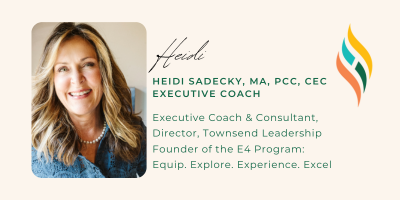
If you're a leader who wants to build that kind of culture, or an organization ready to stop waiting for your best young talent to prove themselves on someone else's terms, this is exactly the work I do.
I work with leaders and organizations to build skillsets to develop talent intentionally — including the emerging leaders who don't fit the traditional mold but have everything it takes to perform at the highest level. Because the window doesn't open itself. Someone has to decide to open it.
Let’s connect and discuss how to grow your leaders to recognize the young women who deserve open windows, and which ones are ready to fly out the window with leadership skills we can develop together.